Leatherback Monitoring Continues on the Huon Coast, Papua New Guinea
Author
Yusuf Adrian Jentewo
Date
23 Oktober 2025
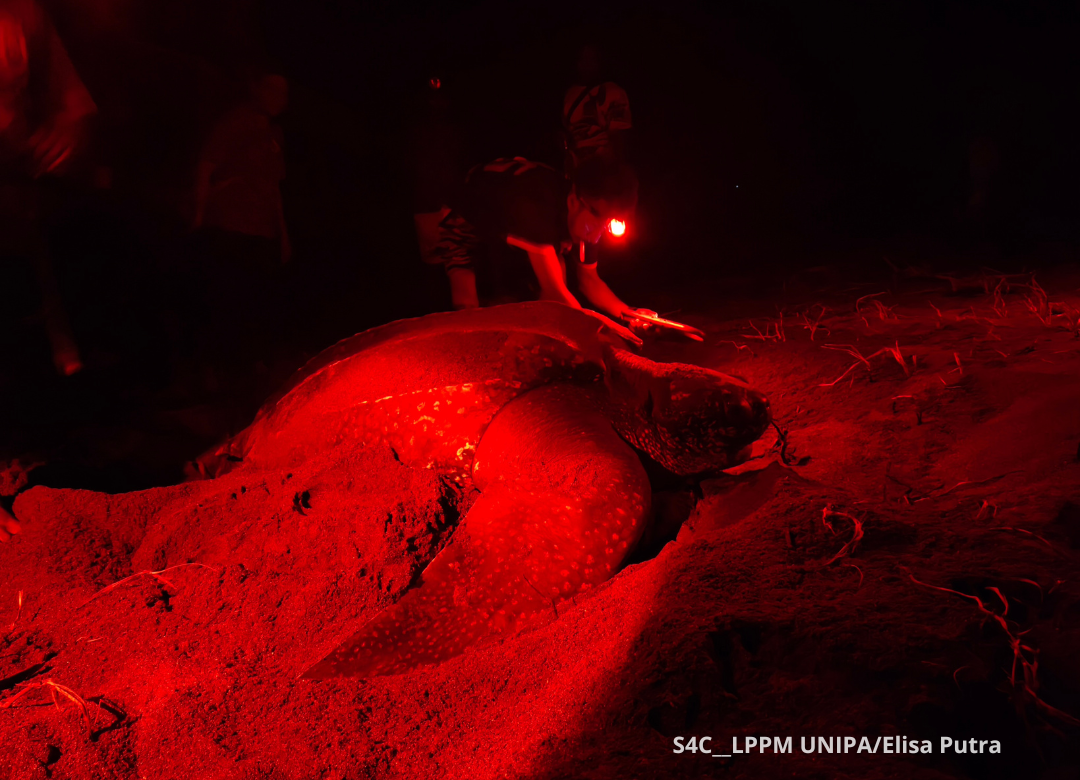
In April 2025, Huon Coast Leatherback Turtle Project (HCLTP) wrapped up the second monitoring season at Lababia nesting beach, in Huon Gulf, Papua New Guinea. The first monitoring was conducted from December 2023 until March 2024. The Huon Gulf coastline is the second-largest nesting site for the Western Pacific leatherback sea turtle (Dermochelys coriacea), following West Papua, which hosts the highest nesting density for this population. This gulf is located in Morobe province, specifically within the Huon District. This sub-population is listed as critically endangered on The International Union for Conservation of Nature(IUCN) Red List (2013) and urgently needs protection in its vital habitats.
To protect leatherback turtles along the Huon Gulf coast, the Huon Coast Leatherback Turtle Project (HCLTP) was launched in 2022 by the Ocean Ecology Network, with the University of Papua as the implementing partner. During the latest nesting season, monitoring was conducted from 16 November 2024 to 8 April 2025. A total of 147 people from Lababia Village participated, working in rotating teams of 13 each week. The community showed strong enthusiasm for the project, as it provided meaningful employment through work as local rangers. Beyond direct income, the project also strengthened the local economy, as earnings from the rangers circulated within the community and supported local livelihoods.
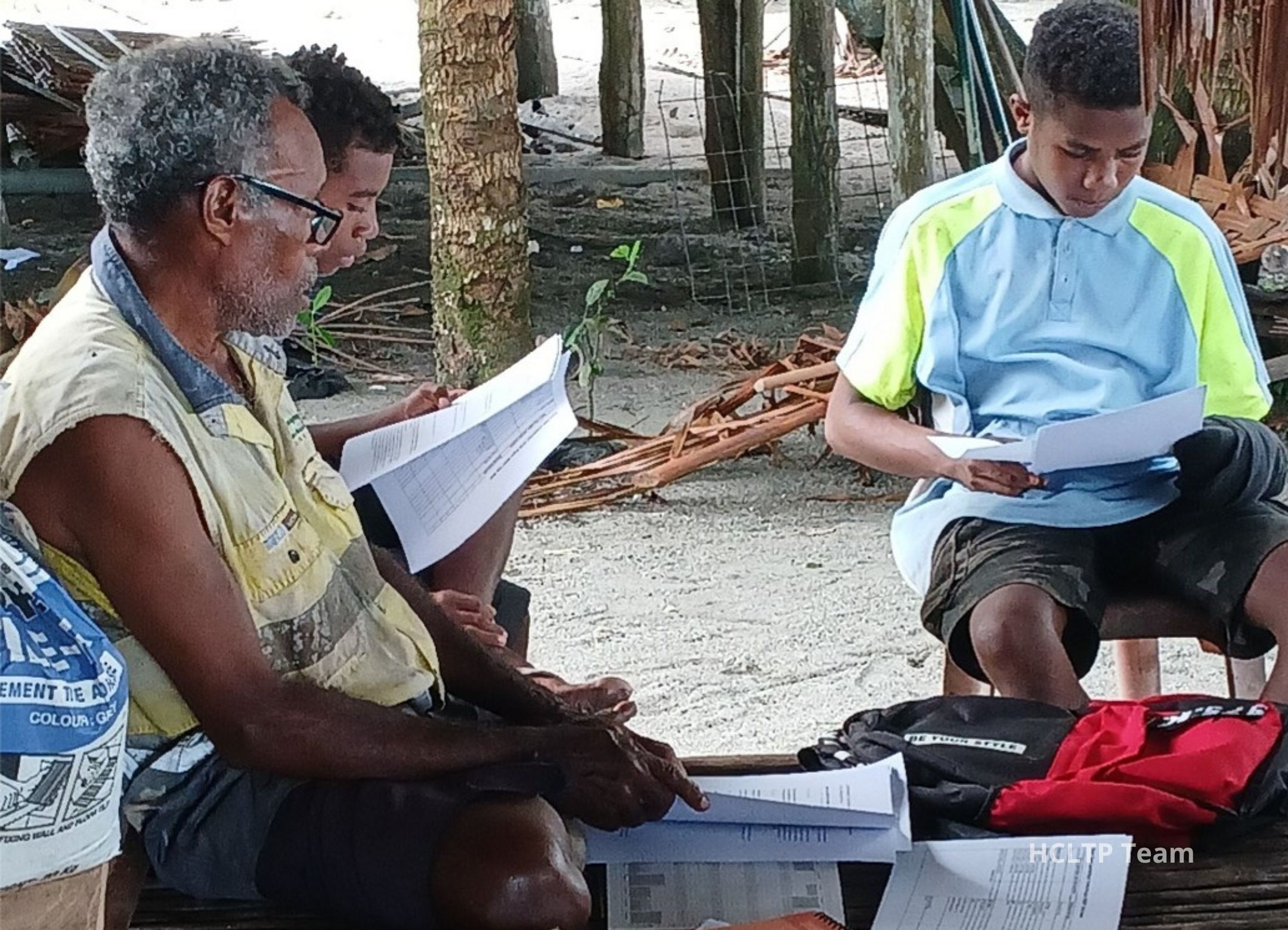
Lababia Rangers after their weekly refresher training (Photo : HCLTP Team)
One of the Kamiali Wildlife Management Area (WMA) leaders signed a Memorandum of Understanding (MoU) with the Ocean Ecology Network (Photo : HCLTP Team)
On 13 November 2024, leaders of the Kamiali Wildlife Management Area (WMA) signed a Memorandum of Understanding (MoU) with the Ocean Ecology Network, witnessed by village elders and community members. The agreement formalized the community’s trust and support for the project in their area. Through the MoU, the project committed to implementing its activities with transparency and inclusivity. In return, the community pledged their support by appointing local representatives to serve as rangers each week, helping ensure the work was carried out with dedication and responsibility.
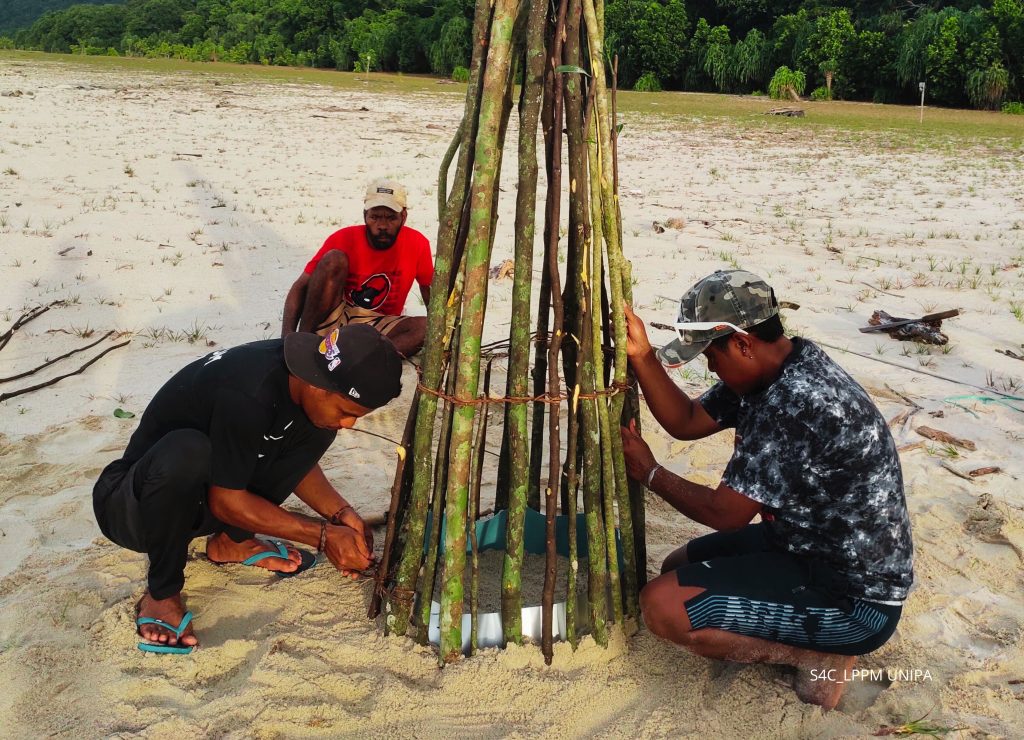
Field Coordinator John Ben worked tirelessly to ensure the program ran smoothly on the ground. Throughout the nesting season, he traveled almost every week from Lae to Lababia, working closely with Lababia Coordinator Jack Nala to oversee local rangers who patrolled the nesting beach daily. The rangers recorded every nest and protected vulnerable ones from threats such as dogs, invasive plants, and high waves. They also built bamboo grids to prevent predators from digging up nests and relocated nests that were at risk due to environmental conditions. These efforts were critical in increasing hatchling survival and supporting leatherback population recovery.
Leatherback turtle nest protected from predators using a bamboo grid (Photo : HCLTP Team)
The team recorded a significant rise in nesting activity this season, with 221 leatherback nests laid—an increase from 174 nests in 2023–2024. Of these, 152 nests were protected, representing 69% of the total, compared to 119 nests (68%) in the previous season. This progress is largely due to the extended monitoring period, which enabled more complete data collection and increased the number of recorded nests. While the previous season covered only four months (December–March), the 2024–2025 season was successfully extended to nearly six months (November–April).
Maju Bersama Indonesia Raya: Pemuda Papua di Garda Terdepan Konservasi Penyu Belimbing
Penulis
Noviyanti
Tanggal
24 Oktober 2024
Dilansir situs resmi Kemenpora RI, Hari Sumpah Pemuda (HSP) ke-96 tahun 2024 mengusung tema “Maju Bersama Indonesia Raya”. Tema ini mengusung semangat sinergi dan kolaborasi pemuda. Selain itu, tema Hari Sumpah Pemuda 2024 diharapkan mendorong para pemuda Indonesia untuk berkontribusi membawa bangsa menuju kejayaan global. Semangat ini mengantarkan kami untuk berbagi cerita tentang tim Program Sains untuk Konservasi LPPM UNIPA yang bekerja bahu membahu bersama masyarakat lokal untuk melakukan pemantauan penyu dan perlindungan sarang di Taman Pesisir Jeen Womom. Tugas penting ini memberi kontribusi secara global untuk konservasi Penyu Belimbing (Dermochelys coriacea), spesies penyu terbesar di dunia.
Wilayah pesisir Kepala Burung Papua di Kabupaten Tambrauw merupakan wilayah peneluran penting bagi penyu belimbing yang bermigrasi ke laut Amerika bagian barat untuk makan disana. Penelitian penyu dan upaya perlindungan dilakukan di kedua sisi Samudera Pasifik. Penelitian dari Tapilatu dkk tahun 2013 memperkirakan aktivitas peneluran penyu belimbing di wilayah Taman Pesisir Jeen Womom menurun 5,9% per tahun dari tahun 1984 hingga 2011.
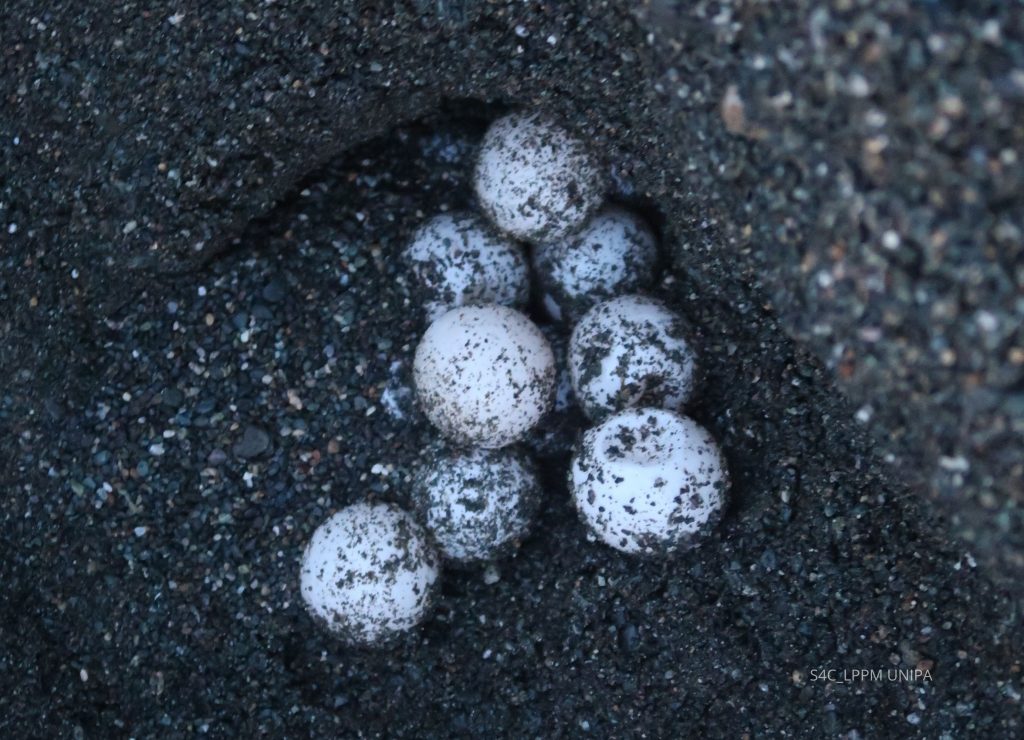
Telur penyu belimbing di sarang relokasi pantai Jeen Syuab (Foto : S4C_LPPM UNIPA/Mike)
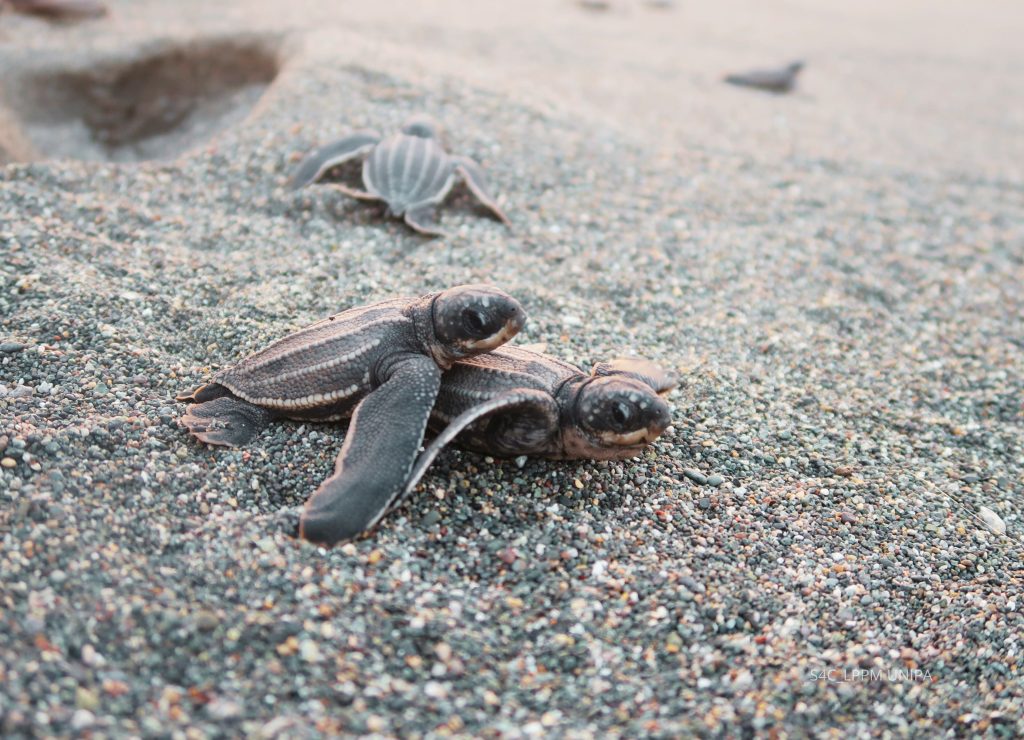
Pelepasan tukik penyu belimbing di pantai Jeen Syuab (Foto : S4C_LPPM UNIPA/Mike)
Lembaga Penelitian dan Pengabdian Kepada Masyarakat Universitas Papua (LPPM UNIPA) turut mengambil bagian dalam upaya global untuk memulihkan populasi penyu belimbing di wilayah samudra Pasifik. Upaya konservasi holistik dilakukan agar tujuan ini bisa tercapai. Tim LPPM UNIPA menjalin kerjasama dengan masyarakat lokal dan pemerintah daerah untuk memastikan keberlanjutan penyu belimbing di daerah ini. Di pantai peneluran Jeen Yessa dan Jeen Syuab yang berada di Distrik Abun dan Tobouw, tim LPPM UNIPA bersama masyarakat lokal dari 5 kampung dekat pantai peneluran yakni; Kampung Resye, Kampung Womom, kampung Syukwo, Kampung Wau, dan Kampung Weyaf. Tim berupaya untuk melindungi sebanyak mungkin sarang penyu belimbing agar produksi tukik maksimal untuk menopang populasi. Setiap tahunnya kru pantai*) direkrut dan diberikan pelatihan untuk memastikan mereka bekerja sesuai prosedur ilmiah yang sudah ditetapkan.
Masyarakat kampung Wau Weyaf melakukan pelepasan tukik penyu belimbing di pantai Jeen Syuab (Foto : S4C_LPPM UNIPA/Mike)
Dalam melaksanakan tugasnya, kru pantai juga berupaya untuk meningkatkan kapasitas masyarakat lokal dalam perlindungan penyu dengan pelatihan dan bekerja di pantai peneluran bersama-sama dengan kru pantai. Sebagian dari masyarakat yang tinggal di kampung-kampung di dekat pantai peneluran bertindak sebagai tenaga patroli lokal. Mereka bekerjasama dengan tim LPPM UNIPA dalam kegiatan pemantauan penyu dan perlindungan sarang. Peran mereka sangat penting. Kearifan lokal yang mereka miliki sangat bermanfaat dalam mengidentifikasi letak sarang penyu. Dari data yang tercatat, tingkat akurasi tenaga patroli lokal dalam mengidentifikasi sarang penyu belimbing mencapai angka 94.7%! Pada musim ombak di pantai Jeen Yessa, dimana tim LPPM UNIPA tidak bisa mengirimkan kru pantai karena kondisi cuaca yang tidak memungkinkan, tenaga patroli lokal mencatat jumlah penyu yang naik bertelur. Bahkan ketika pandemi COVID-19, dimana pembatasan perjalanan membuat hampir seluruh pantai peneluran di berbagai negara kehilangan kesempatan untuk melakukan kegiatan pemantauan penyu, tenaga patroli lokal justru menjadi tenaga andalan kala itu.
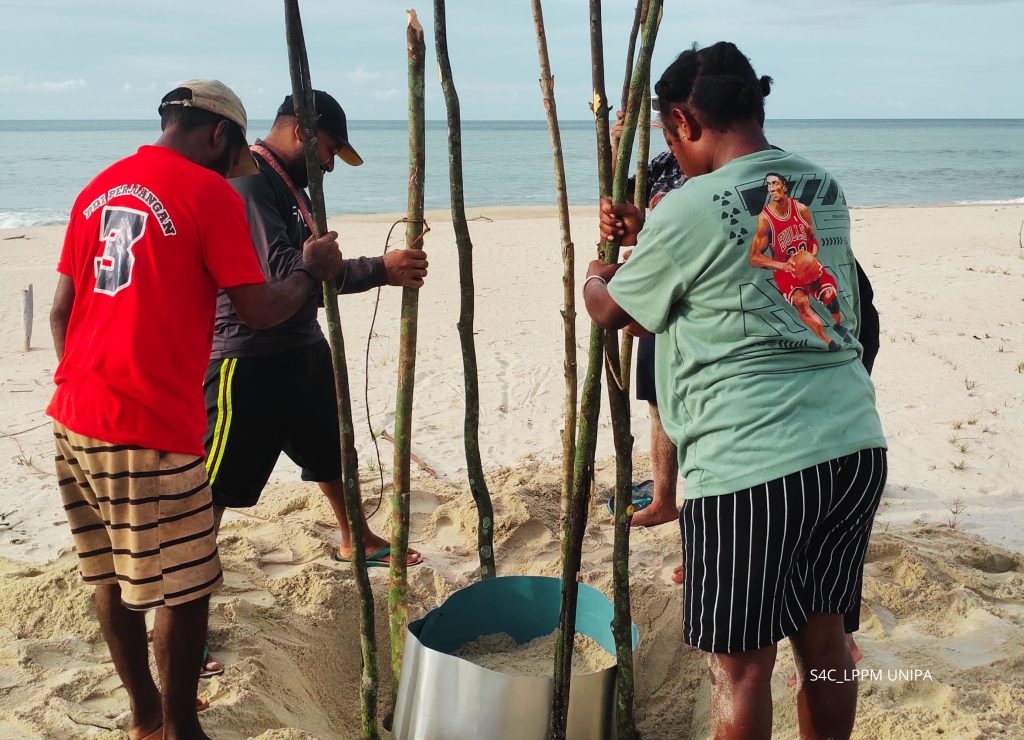
Masyarakat lokal juga terlibat dalam membuat kandang relokasi yang digunakan sebagai area aman membenamkan sarang dari lokasi yang terancam. Kandang relokasi merupakan kandang semi tertutup dengan bentuk persegi yang dibuat di dekat dengan areal peneluran dan di atas batas pasang. Setiap musim peneluran, tim LPPM UNIPA selalu melibatkan masyarakat lokal untuk membangun kandang relokasi. Karena kegiatan ini rutin dilakukan setiap tahunnya, masyarakat sudah terbiasa dan dapat membuat kandang relokasi yang sesuai dengan prosedur ilmiah yang ditetapkan oleh tim LPPM UNIPA. Tim LPPM UNIPA juga melatih dan mendampingi masyarakat lokal dalam memindahkan sarang penyu belimbing ke kandang relokasi agar sukses penetasan sarang tetap terjaga. Para tenaga relokasi menerima upah per sarang yang mereka pindahkan. Upah yang diterima dapat digunakan untuk memenuhi kebutuhan sandang pangan keluarga, biaya sekolah, atau kebutuhan keluarga lainnya.
Masyarakat membuat perlindungan sarang untuk telur penyu (Foto : S4C_LPPM UNIPA/Faisal)
Masyarakat membuat perlindungan sarang telur penyu dari ancaman predator (Foto : S4C_LPPM UNIPA/Faisal)
Kami melakukan wawancara singkat dengan Faisal, salah satu kru pantai yang sudah bekerja sejak tahun 2020. Faisal bercerita bahwa bekerja bersama masyarakat lokal sangat menyenangkan. Kehadiran mereka memberi warna dalam keseharian kru pantai. Seringkali di waktu-waktu istirahat, mereka berkumpul bercerita kisah pengalaman hidup hingga bercanda bersama. Mereka sering sekali membawakan kru pantai sayur-sayuran dari kampung mereka atau membawa daging hasil buruan di hutan untuk dimakan. “Kehadiran masyarakat lokal di pos pemantauan penyu sangat penting. Ketika ada hal-hal teknis dalam membangun pos yang tidak kami ketahui, beberapa dari mereka bekerjasama dengan kami membangun fasilitas-fasilitas pos kami.” Ujar Faisal ketika bercerita mereka pernah membangun fasilitas di pos pemantauan penyu tempat mereka bekerja.
Kisah kolaborasi ini tidak hanya menjadi upaya melindungi satwa langka, tetapi juga menggambarkan semangat persatuan dan sinergi pemuda serta masyarakat lokal dalam menjaga warisan alam Indonesia. Dengan semangat ‘Maju Bersama Indonesia Raya’, kita percaya bahwa langkah-langkah kecil di pesisir Papua ini akan berdampak besar bagi masa depan ekosistem dunia.
Footnotes: Kru pantai adalah istilah yang digunakan untuk tenaga patroli yang direkrut tim LPPM UNIPA yang berasal dari alumni berbagai universitas.
Dimulainya Kembali Kegiatan Pemantauan Penyu di Teluk Huon, Papua New Guinea
Penulis
Yusup Jentewo
Tanggal
9 Maret 2024
Teluk Huon, Provinsi Morobe, Papua New Guinea diketahui merupakan pantai peneluran kedua terpenting bagi penyu belimbing di sekitar wilayah Samudra Pasifik bagian barat. Namun sayangnya kegiatan pemantauan di wilayah ini telah berhenti cukup lama, kurang lebih 10 tahun yang lalu. Tim Universitas Papua (UNIPA) sejak tahun 2022 melakukan berbagai upaya koordinasi untuk memulai kembali kegiatan pemantauan di Teluk Huon. Pada bulan Januari 2023 lalu, tim UNIPA sempat pergi ke kota Lae di Papua New Guinea dan berkunjung ke dua kampung di Teluk Huon yaitu Kampung Lababia dan Kampung Busama. Kunjungan dimaksudkan untuk bertemu stakeholder penting di kota Lae menyampaikan maksud memulai kegiatan monitoring dan mengumpulkan aspirasi dari masyarakat kampung. Berita selengkapnya di sini.
Tindak lanjut dari kunjungan tersebut adalah pada akhir November 2023 tim UNIPA kembali melakukan kunjungan kedua di tahun tersebut. Kunjungan kali ini diwakili oleh Yusup Jentewo dan Tonny Duwiri selama kurang lebih tiga minggu. Tim tiba di kota Lae tanggal 28 November 2023, dan bertemu dengan John Ben selaku Field Coordinator dalam project ini. Tanggal 30 November tim langsung turun ke Kampung Lababia. Tim berangkat bersama Councillor Kampung Lababia (istilah yang serupa dengan kepala kampung). Sesampainya di sana, tim berdiskusi dengan perwakilan orang-orang tua di kampung serta beberapa masyarakat kampung yang dahulu terlibat dalam kegiatan pemantauan di program sebelumnya kami diizinkan untuk memulai kegiatan pemantauan di Kampung Lababia. Musim ini kegiatan pemantauan difokuskan pada Kampung Lababia, untuk Kampung Busama masih dalam tahapan koordinasi. Kampung Lababia juga masuk di dalam wilayah konservasi Kamiali Wildlife Management Area yang luasnya mencapai 69 ribu hektar dan mencakup daratan serta perairan.
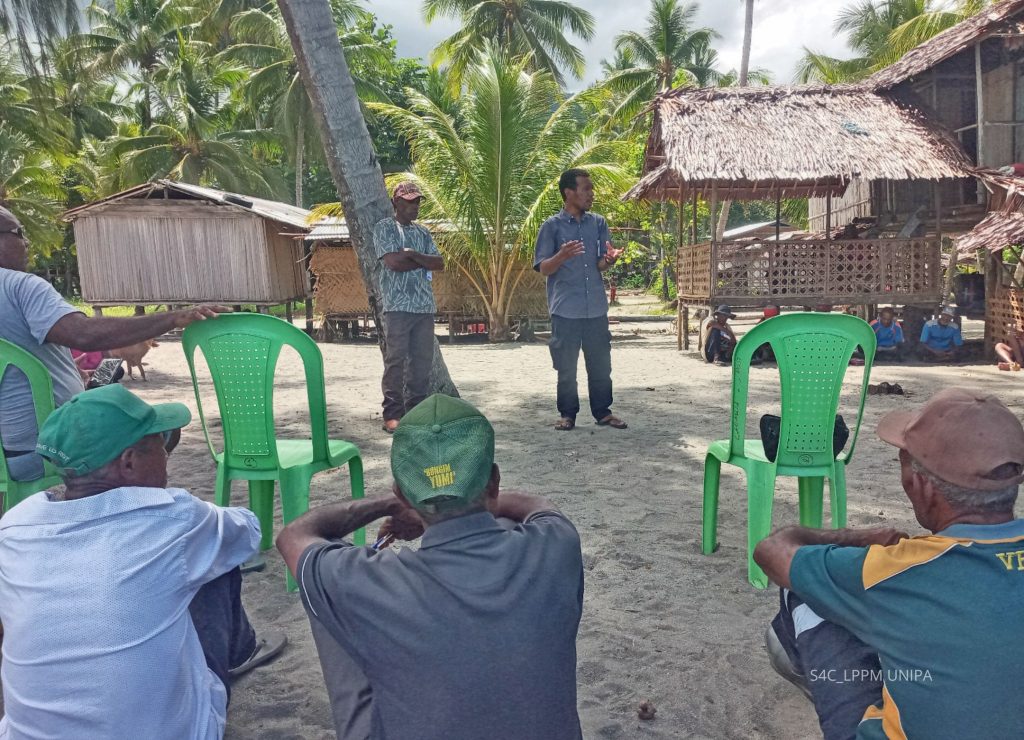
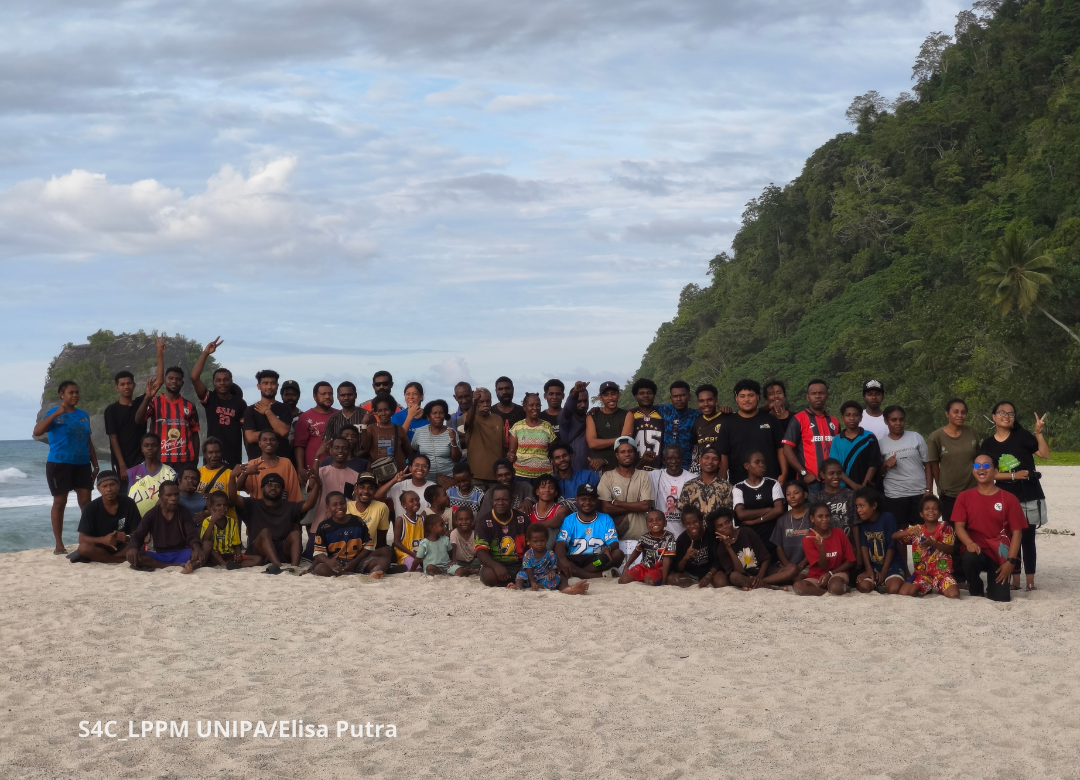
Yusup berbicara di pertemuan masyarakat kampung Lababia (Foto : S4C_LPPM UNIPA/Tonny)
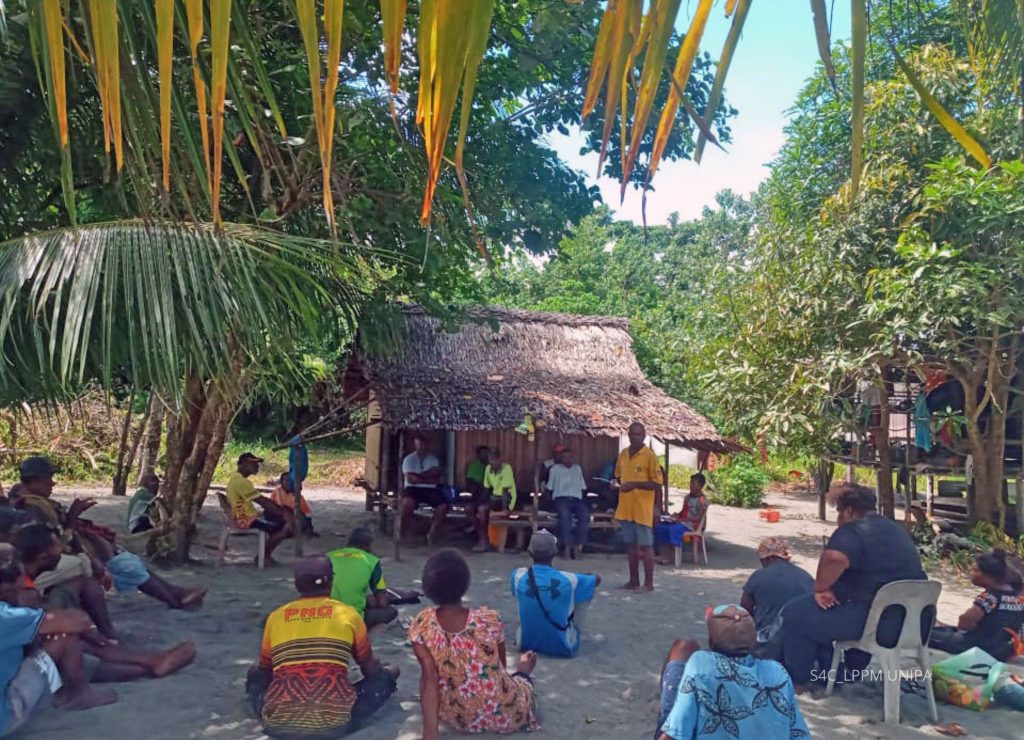
Pertemuan dengan Tua-Tua Kampung (Foto : S4C_LPPM UNIPA/Tonny)
Hari Sabtu siang tanggal 2 Desember 2023 koordinator pemantauan di Kampung Lababia yaitu Jack Nala mengumpulkan beberapa masyarakat yang pernah terlibat di pemantauan sebelumnya ataupun beberapa masyarakat yang baru untuk mengikuti materi penyegaran tentang teknik-teknik pemantauan dan lembar data yang dipakai. Untuk membedakan masyarakat yang pernah terlibat di pemantauan ini dengan masyarakat yang baru bergabung, maka para ranger lama disebut sebagai Team Leader (pimpinan tim) dan masyarakat baru yang terlibat disebut sebagai ranger. Pemantauan di pantai peneluran Kampung Lababia melibatkan seluruh keluarga di kampung dengan membagi waktu tugasnya ke dalam rotasi satu mingguan. Terdapat 9 anggota masyarakat yang berlaku sebagai rangers dan 3 team leaders yang bekerja setiap rotasi. Para ranger sangat antusias dengan materi yang diberikan oleh John Ben, Yusup dan Tonny dibuktikan dengan banyaknya yang bertanya dan mereka ingin benar-benar mengetahui terkait protokol yang dipakai serta perbedaannya dengan sebelumnya.
Yusup berbicara di pertemuan masyarakat kampung Lababia (Foto : S4C_LPPM UNIPA/Tonny)
Pantai peneluran penyu belimbing di Kampung Lababia terbagi dalam 6 sektor pantai, dimana satu sektor berjarak 1 kilometer. Sektor pantai 1 sampai 4 dapat dipantau dengan berjalan kaki dari perkampungan namun untuk ke sektor pantai 5 dan 6 harus melewati dua kali kecil yang bernama Arengke dan Biloi. Rangers yang memantau di sektor 5 dan 6 menggunakan perahu dayung untuk ke lokasi tersebut. Setelah melakukan penyegaran materi, malam harinya para rangers langsung memulai kegiatan pemantauan penyu dengan melakukan patroli malam untuk memantau indukan penyu yang naik ke pantai.
John Ben akan melakukan monitoring dan evaluasi (monev) setiap minggu ke Kampung Lababia untuk memastikan kegiatan pemantauan berjalan baik dan memberikan penyegaran materi setiap minggu untuk anggota masyarakat yang baru terlibat. Saat tulisan ini dibuat rotasi di Kampung Lababia telah berjalan sebanyak 13 kali dan sudah lebih dari 150 sarang yang terdata di pantai peneluran Lababia.
Inisiasi Kegiatan Konservasi Penyu Belimbing di Teluk Huon, Papua Nugini
Penulis
Tonny Duwiri, Yusup Jentewo dan Deasy Lontoh
Tanggal
21 Februari 2023
Jumlah penyu belimbing di Pasifik Barat telah jauh berkurang dari tahun 1980 karena berbagai tekanan dalam empat dekade terakhir. Aktivitas peneluran terkonsentrasi di Papua Barat, Indonesia (sekitar 75%), Papua New Guinea (5-25%), dan selebihnya di Kepulauan Solomon dan Vanuatu. Sayangnya kegiatan pemantauan aktivitas peneluran dan perlindungan sarang penyu belimbing di Papua Nugini (PNG) terhenti sejak tahun 2013. Lembaga Penelitian dan Pengabdian kepada Masyarakat Universitas Papua (LPPM UNIPA) melalui program Sains untuk Konservasi (S4C) dipercayakan untuk mendampingi tim lokal untuk memulai kembali kegiatan konservasi penyu belimbing di Teluk Huon, PNG. Donor memberikan kepercayaan tersebut karena mereka menganggap kegiatan konservasi penyu belimbing yang holistik di Taman Pesisir Jeen Womom, Kabupaten Tambrauw yang dilakukan UNIPA berhasil. Menjelang akhir tahun 2022, tim LPPM UNIPA dan penasehat teknis dari US NOAA memulai proses ini dengan mengidentifikasi dua penasehat lokal dan merekrut anggota tim lokal, Maureen Ewai sebagai Project Manager dan John Ben sebagai Field Coordinator.
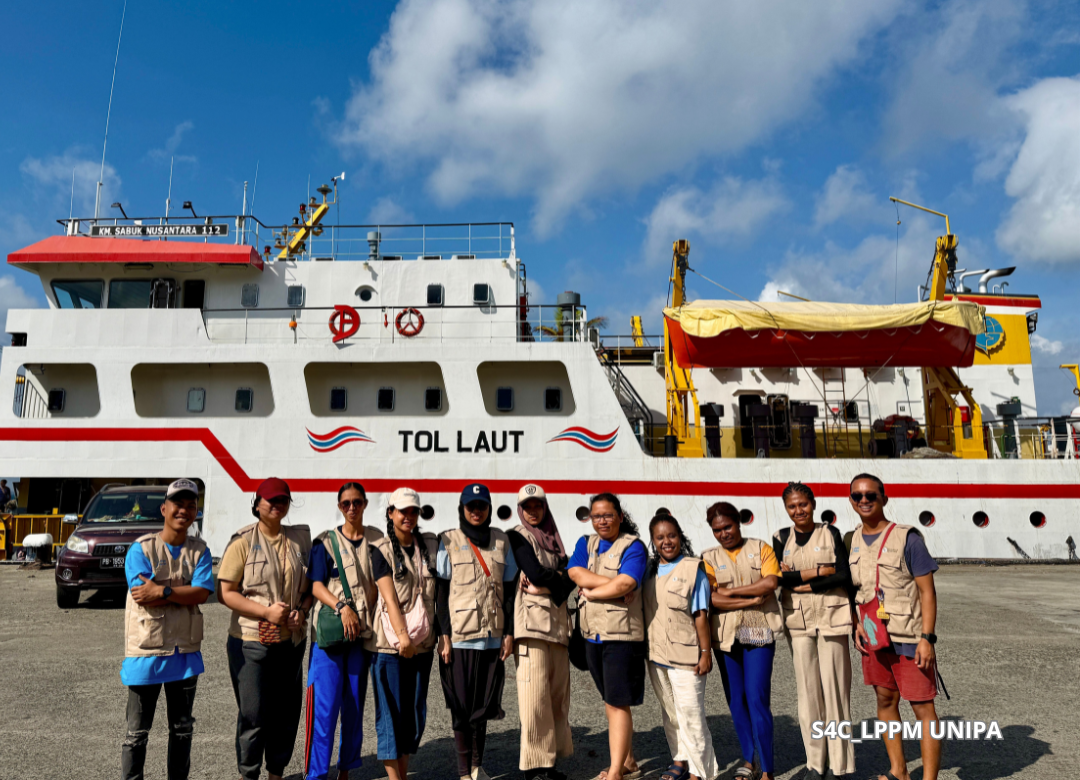
Sesaat sebelum tim S4C menyeberang dari Skouw Indonesia ke Wutung Papua Nugini (Foto : S4C_LPPM UNIPA)
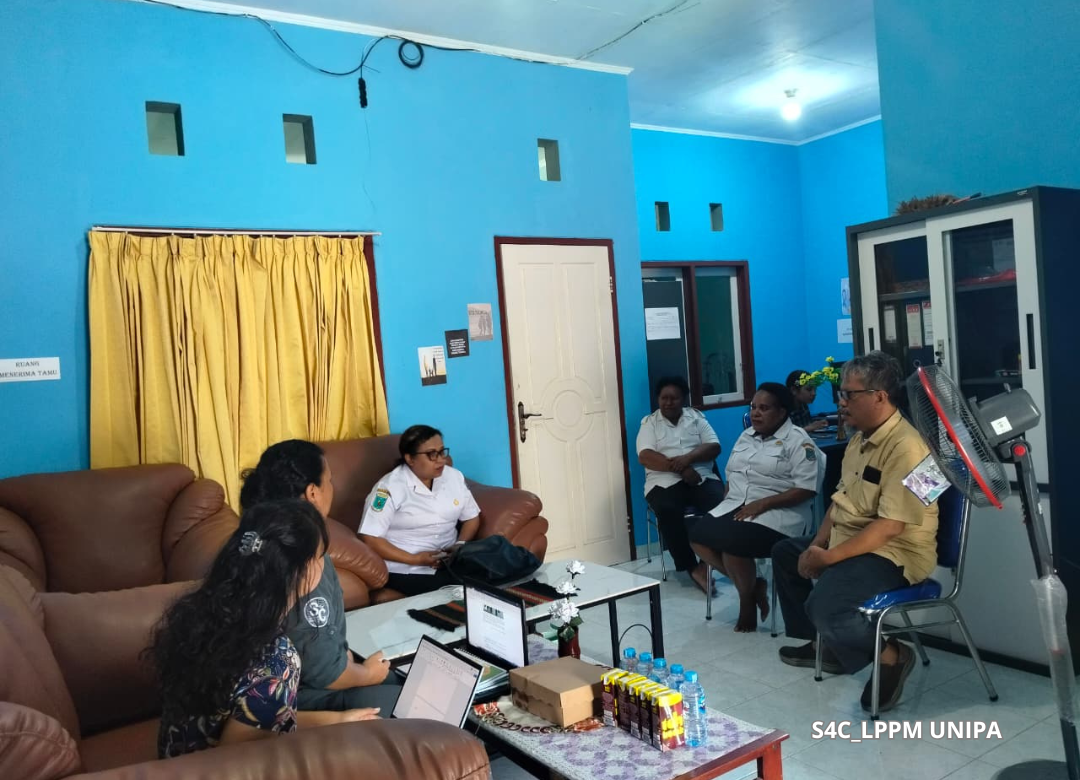
Tim bertemu dengan Kepala Divisi Sumber Daya Alam Provinsi Morobe (Foto : S4C_LPPM UNIPA/Tonny Duwiri)
Pada tanggal 14 Januari 2023, tiga anggota tim S4C, Deasy Lontoh, Yusup Jentewo dan Tonny Duwiri berangkat ke PNG untuk bertemu dengan tim lokal di PNG dan berkoordinasi dengan pemerintah, mitra, dan masyarakat kampung yang tinggal di pantai peneluran. Perjalanan dari Manokwari menggunakan transportasi udara ke Bandara Sentani dan dilanjutkan jalur darat ke perbatasan dan ke Vanimo. Dari Vanimo, tim berangkat dengan pesawat ke kota Lae, Provinsi Morobe. Tim berdiskusi dengan salah satu penasehat proyek, Ibu Modi Pontio, dari Tree Kangaroo Conservation Project dan pemerintah terkait seperti pemerintah Distrik Huon dan pemerintah provinsi Morobe yang diwakili Kepada Divisi Sumber Daya Alam. Selain itu tim juga bertemu dua organisasi masyarakat yaitu Kamiali Foundation dan Morobe Development Foundation. Dalam pertemuan-pertemuan ini, tim S4C dan tim PNG memperkenalkan anggota tim dan rencana kerja yang akan dilakukan, dan berdiskusi tentang peluang bermitra.
Peran serta masyarakat lokal sangat diperlukan bagi kegiatan konservasi. Oleh sebab itu, kami bersama tim PNG mengunjungi dua kampung prioritas, Busama dan Kamiali antara 19 dan 23 Januari 2023 untuk mengetahui respon masyarakat terhadap kegiatan ini. Diskusi-diskusi dilakukan dengan masyarakat secara umum maupun berkelompok. Semua masyarakat menyambut baik inisiasi kegiatan konservasi penyu di kampung mereka, terlebih karena kegiatan kali ini memiliki program pemberdayaan masyarakat. Program pemberdayaan masyarakat ini dilakukan untuk meningkatkan taraf hidup masyarakat yang tinggal berdekatan dengan pantai peneluran, dan bentuknya akan disesuaikan dengan keinginan dan kebutuhan masyarakat. Bentuk program pemberdayaan yang cocok menjadi salah satu topik diskusi dengan masyarakat Busama dan Kamiali.
Tim berdiskusi dengan masyarakat di Kampung Busama (Foto : S4C_LPPM UNIPA/Tonny Duwiri)
Tim berdiskusi dengan ibu-ibu di Kampung Kamiali (Foto : S4C_LPPM UNIPA/Tonny Duwiri)
Selain itu, tim juga melakukan penghitungan sarang penyu belimbing di beberapa pantai dengan perahu, dan menemukan 134 sarang antara Labu Tale sampai Paiawa.


 Science for Conservation