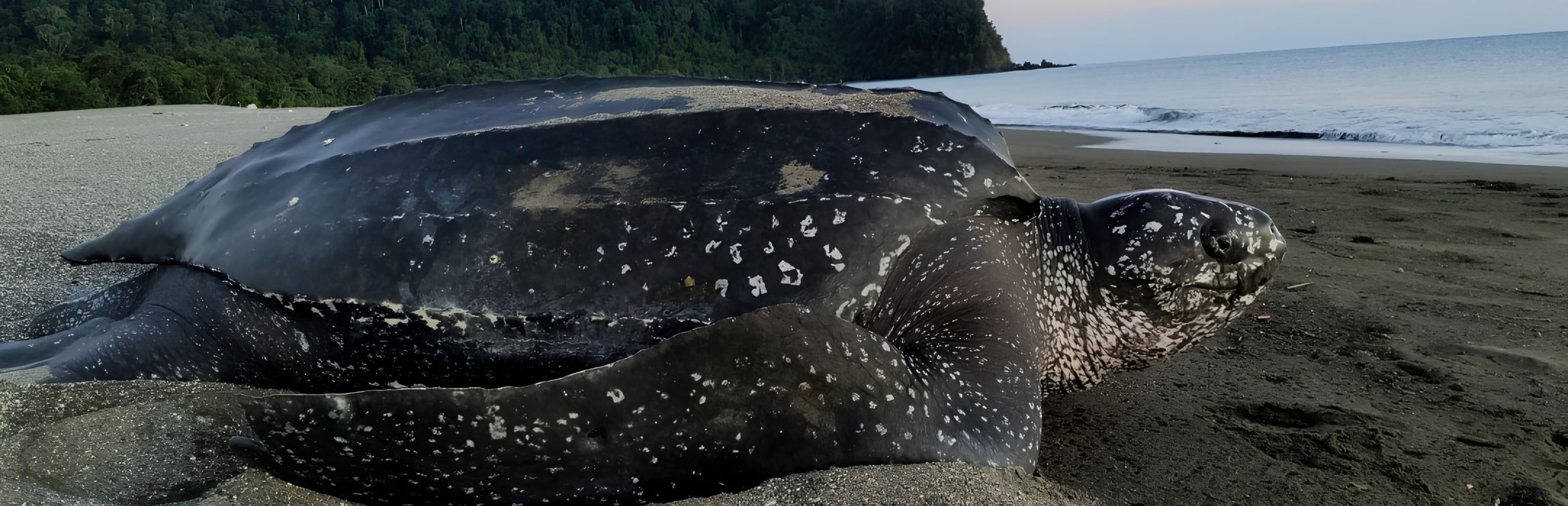
The beaches of Bird's Head, West Papua, are important nesting habitats for leatherback turtles. Each year, approximately 75% of leatherback turtle nesting activity in the Western Pacific occurs there, particularly Jeen Yessa Beach (formerly Jamursba Medi) and Jeen Syuab Beach (formerly Wermon). Jeen Yessa Beach is located in Tobouw District, while Jeen Syuab Beach is located in Abun District, Tambrauw Regency.
Both are within the Jeen Womom Coastal Park Conservation Area. Jeen Womom means leatherback turtle beach in Karon (the local language). Nesting activity occurs year-round in Jeen Womom, with two seasons: April–September (the calm season) and October–March (the surf season). Besides leatherback turtles, Jeen Womom Coastal Park is also a nesting ground for olive ridley, green, and hawksbill turtles. More than 3,000 turtle nests can be found in Jeen Womom Coastal Park each year.
The leatherback turtle was considered extinct in Terrenganu, Malaysia. In the 1950s, over 10,000 leatherback nests were laid annually. However, because all eggs were harvested without a trace over several decades, by 1995, only about 1% of the 1950s numbers remained. In Mexico and Central America, the number of leatherback turtle nests had declined by more than 90%. Despite ongoing conservation efforts, the leatherback turtle population on Jeen Yessa and Jeen Syuab beaches has not recovered. The number of leatherback turtle nests in West Papua has declined by 78% in Jeen Yessa since 1984 and by 63% in Jeen Syuab since 2002. The population decline in West Papua is not as drastic as in other nesting areas. However, with a population decline of around 6% per year, leatherback turtles will become extinct without conservation efforts.
The combination of the capture of reproductive-age turtles and the large-scale harvesting of eggs from the 1970s to the 1990s led to a drastic decline in the turtle population in Jeen Womom. Adult turtles, which would have produced eggs and hatchlings for the future, were depleted due to capture, and the next generation was lost due to the harvesting of eggs. The hope for the recovery of the leatherback turtle population in the Pacific lies in Bird's Head.
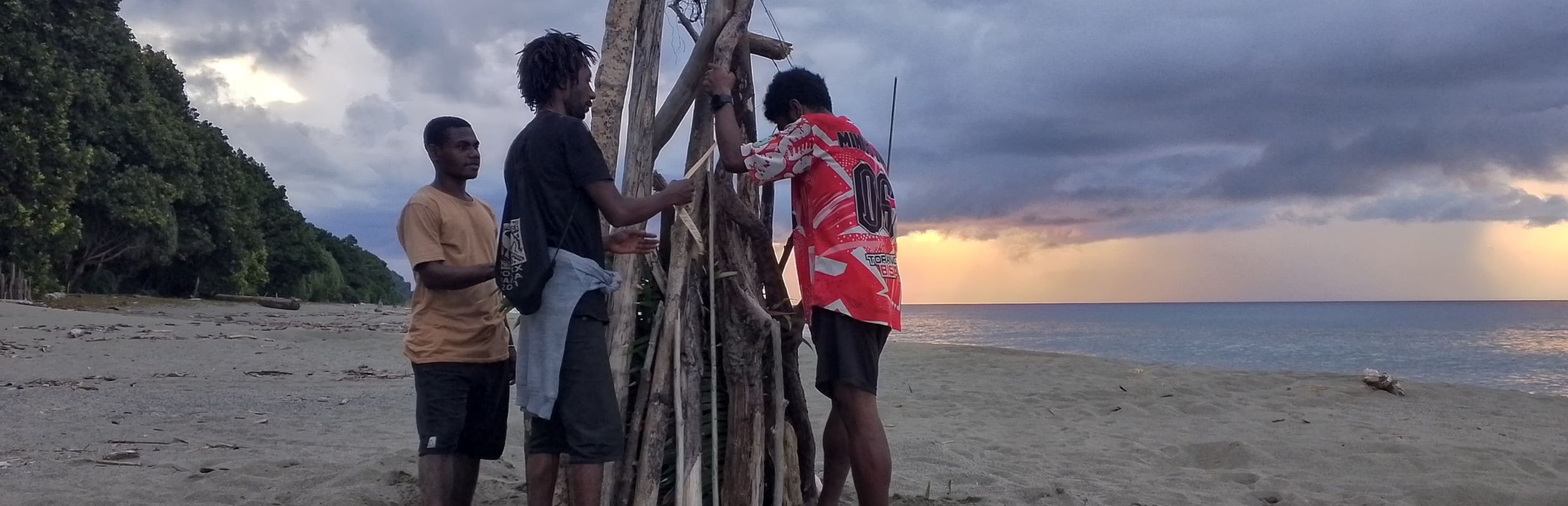
Low hatching success is thought to be slowing population recovery in Jeen Womom. Hatching success is the proportion of eggs that hatch in a nest. Research by UNIPA (University of Papua) indicates that predation by pigs and dogs, wave erosion, tidal inundation, and high sand temperatures are the main factors causing nests to fail to hatch or have low hatching success. To protect nests from predation by pigs or dogs, the UNIPA team fenced the nests and encouraged local communities to hunt pigs. Nests threatened by erosion and tidal inundation were relocated to safer coastal zones, and shelter was provided for nests located in areas with high sand temperatures. In addition to assisting in efforts to control nest predation by pigs, local communities also earned additional income by patrolling the beach.
UNIPA implements the Turtle Monitoring and Nest Protection Program on Jeen Yessa and Jeen Syuab beaches with the aim of:
Updating nesting activity data for all turtle species to monitor trends in turtle populations.
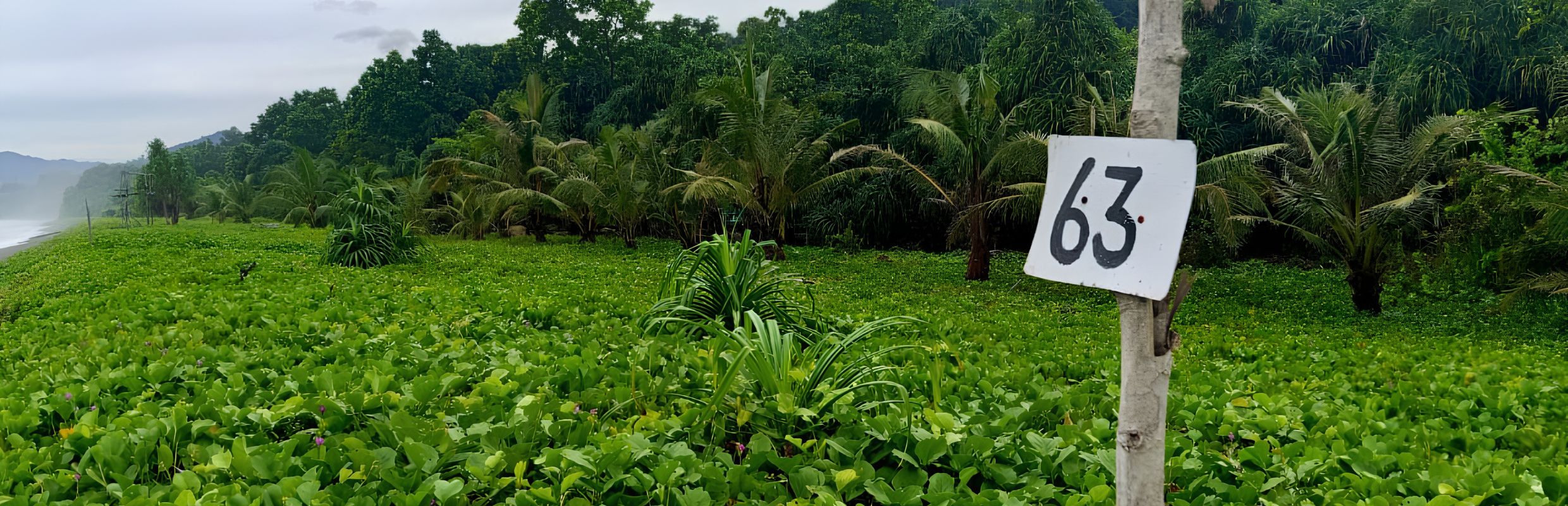
Increase hatchling production by protecting nests from various threats, such as high sand temperatures, predation by pigs and dogs, erosion due to waves, tidal inundation, and root intrusion of Ipomoea sp.
Conducting research that supports turtle conservation efforts
Collection of Publications and Scientific Journals on the Results of Turtle Monitoring and Nest Protection Activities
Collection of Publications and Scientific Journals on the Results of Turtle Monitoring and Nest Protection Activities
Location
0
Nest Hatching
0
Number of Nests
0
Hatchling Estimate
0
*Based on 2024 Data
Podcast - Turtle tracks, Our tracks together
The conservation of leatherback turtles in Jeen Womom Coastal Park is increasingly threatened by the climate crisis—which disrupts the sex ratio of hatchlings—and plastic pollution in the ocean. Ms. Deasy Lontoh's presentation clearly illustrated the collaborative dedication between the UNIPA team and the local indigenous community, who tirelessly fence and relocate thousands of nests from predators and abrasion as the primary defense for this ancient animal. Because marine ecosystems are interconnected, the struggle on this coastline demands real contributions from young people everywhere, from daily steps to stop the use of single-use plastics to leveraging the power of social media as a virtual campaign space to raise awareness of conservation.
The UNIPA LPPM Turtle Monitoring and Nest Protection Team works at Jeen Yessa and Jeen Syuab beaches. Jeen Yessa Beach is 18 km long and is divided into three beaches: Wembrak, Batu Rumah, and Warmamedi. The sand color on Jeen Yessa Beach varies from white at Warmamedi to blackish at Wembrak.
The main threats to turtle nests on Jeen Yessa Beach include: predation by pigs, dogs, and monitor lizards, high sand temperatures, beach erosion, and nests being inundated by high tides. Jeen Syuab Beach is located 30 km east of Jeen Yessa Beach and is 6 km long. The sand is blackish. The main threats to turtle nests on Jeen Syuab Beach are: invasion of Ipomoea sp. roots during the April-September nesting season and erosion due to waves during the October-March nesting season
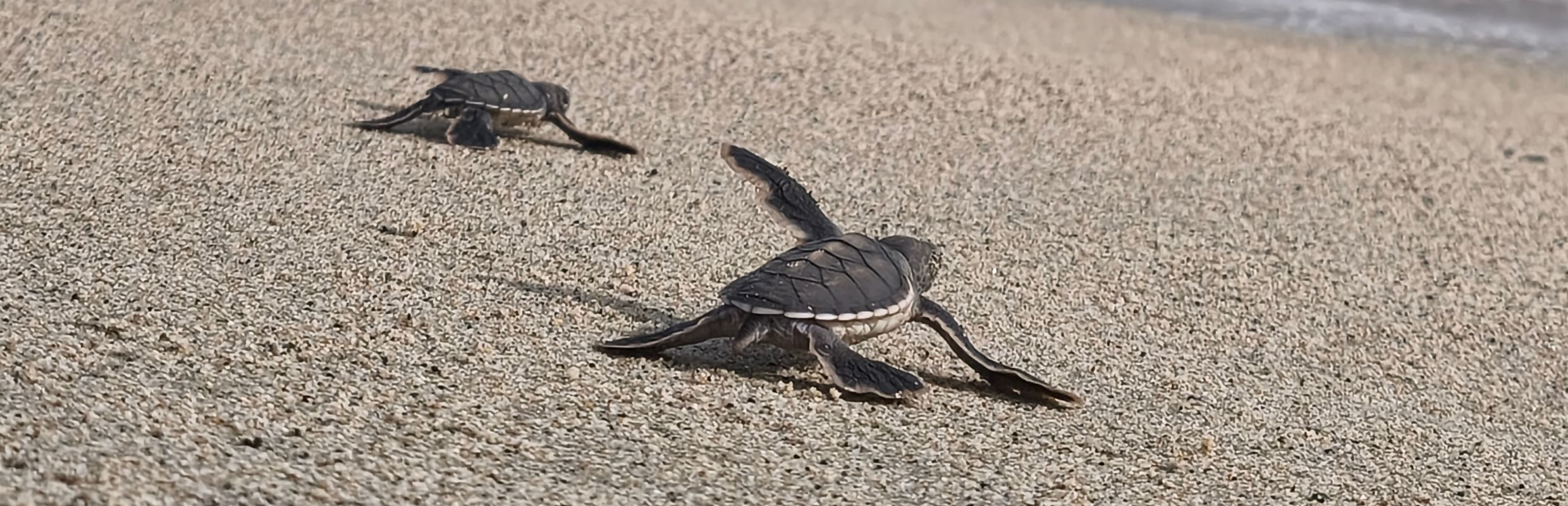
Pemulihan populasi penyu belimbing bertumpu pada produksi tukik yang cukup dari pantai peneluran dan tingkat mortalitas di laut. Oleh sebab itu tim pemantauan penyu dan perlindungan sarang LPPM UNIPA bersama anggota masyarakat lokal berupaya keras untuk meningkatkan jumlah tukik yang dihasilkan dengan melindungi sarang. Pemantauan aktivitas peneluran yang dilakukan secara rutin agar tersedia data-data yang dapat digunakan untuk menyusun strategi-strategi yang mendukung pemulihan populasi penyu belimbing di wilayah ini.
Kajian ilmiah terus mendasari kegiatan pemantauan penyu dan perlindungan sarang di Taman Pesisir Jeen Womom. Tim pantai UNIPA melaksanakan tiga penelitian pada tahun 2022: (1) Penelitian tingkat predasi sarang di pantai Jeen Yessa sebelum dan sesudah sasi dibuka (2) Penelitian efektifitas perlindungan sarang menggunakan naungan cocomesh (anyaman serabut kelapa) (3) Pemantauan suhu pasir pada kedalaman sarang di pantai Jeen Yessa dan Jeen Syuab.
Untuk menjamin setiap aktivitas pemantauan penyu dan perlindungan sarang dilaksanakan dengan baik, setiap tenaga patroli dari masyarakat lokal atau penggiat konservasi penyu perlu dilatih. Peningkatan kapasitas masyarakat lokal sebagai tenaga patroli merupakan bagian penting dari program kami.

 Science for Conservation